
Selected works 2001 — Present
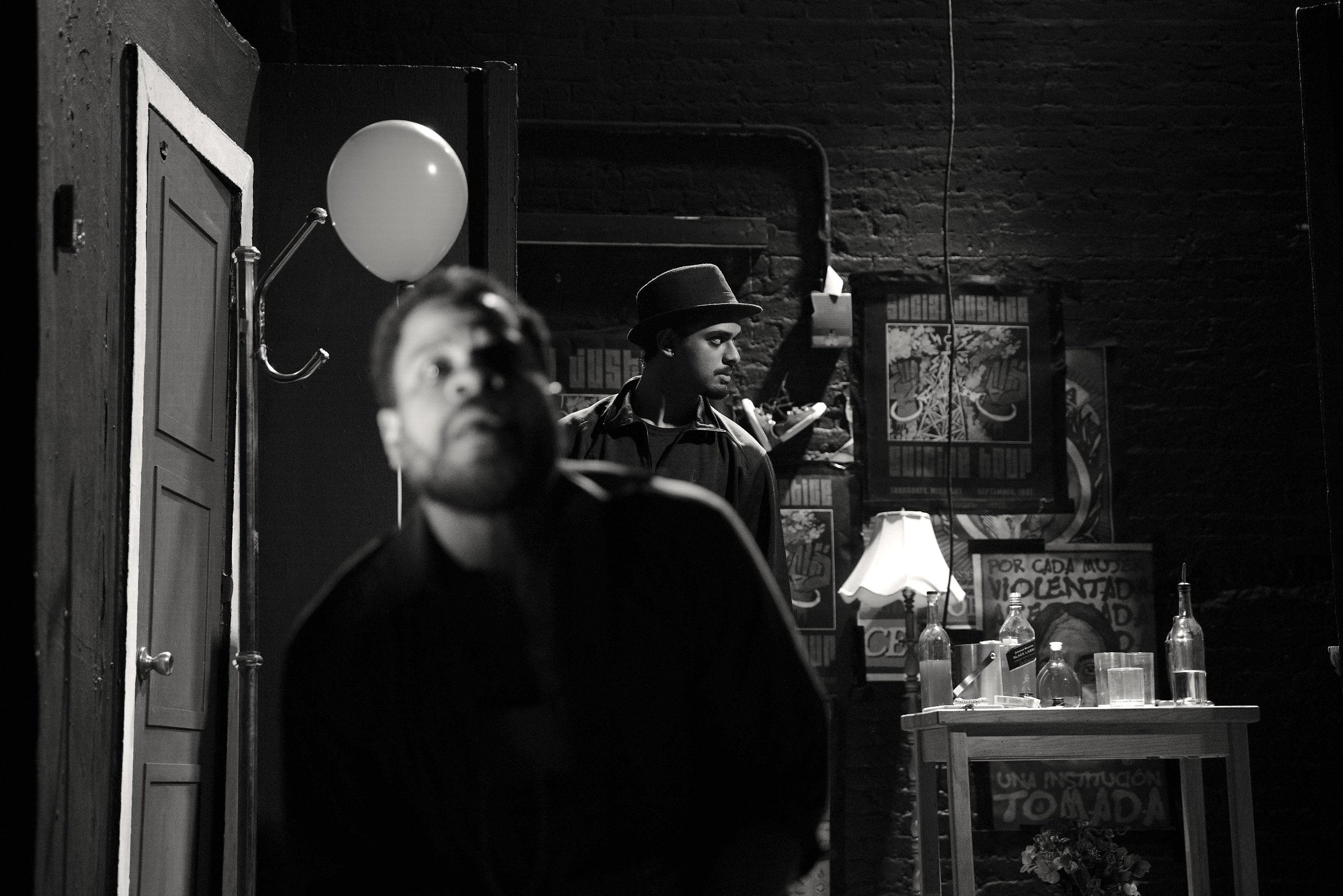
A Cosmic Fanonian Opera: The horrifying ending of Kangalee’s 2026 masterpiece “My Dying City Vol.II (The Social Justice Suicide Hour)” a play that explored aspects of grief, indecision, confusion, the inner conflicts of The Left…and heartbreak of revolutionary ideals. Che Ayende, foreground, and Brandon Geer, background. Photo by TBYoung.
2001 — As an Act of Protest
AS AN ACT OF PROTEST is a gritty, lo-fi revolutionary docudrama about the psychological effects of racism that leads to armed resistance. It has aesthetically and politically hovered over everything that Kangalee has created ever since. The film crystalized a lot of the beliefs that Kangalee Arts further developed for the next two decades. It brought the Black Arts Movement into the 21st cinema while simultaneously challenging nearly all the popular and underground modes of art at the time. It was a “Fanonian art film.” ‘Too political’ for the art aesthetes and ‘too artsy’ for conformist Leftists. Although a film, it has been a central force in the revolutionary theater of the New Millennium as it acts as a conscience bearer for political artists and those claiming to be revolutionary. The movie also crystallizes Kangalee’s notion of the Actor holding the most revolutionary promise of all artists, of all people. The film passionately presents and debates this idea. Blacklisted by the Giuliani administration and rediscovered years later, the film became a cult classic - finding an audiences amongst radical artists, Black guerrilla filmmakers, and poets in and around the avant-garde. But it eluded an entire generation, mystified its successors, was forgotten - and has now been rediscovered by an entirely new generation.
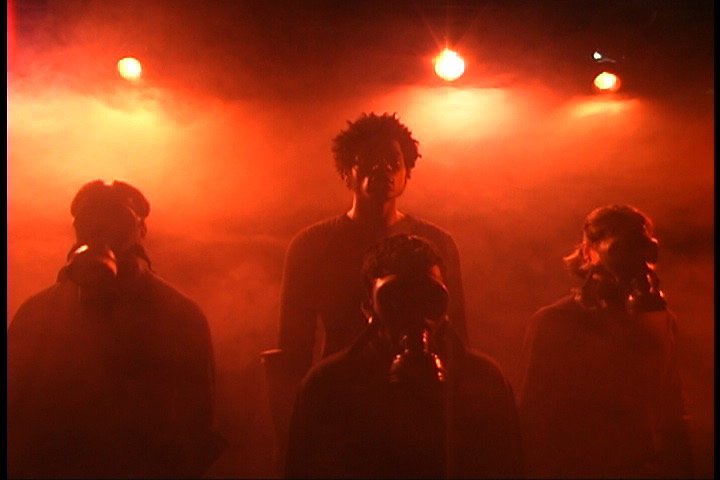
Rarely seen and out of circulation, the film had better reception, ironically, outside of NYC — particularly in the Southern part of the country like North Carolina and overseas in Europe. Distributed briefly by Speller Street Films, the film was streaming on Vimeo until 2025. READ MORE ABOUT IT HERE.
2011 — Gentrified Minds (The NY Horror Vol. II)
Created during a period of rapid change in New York City, GENTRIFIED MINDS (THE NY HORROR VOL.II) was an experiment in finding a form for Kangalee's increasingly hybrid writing. His first original MONO, poetry, political commentary, humor and live music collided in the figure of The Nomad Junkie—part poet, part punk singer, part theatrical alter ego.
Rather than return conventionally to acting, Kangalee used the character as a mask through which he could perform again. Verbose, anarchic, musical and deliberately unruly, Gentrified Minds became his first sustained experiment with solo performance—inspired by his own short story, What Happened to the Brother on the Block? (NY Horror Vol. 1). Gentrified Minds was an early precursor to the stripped-down performance essays Kangalee would return to more than a decade later.
Downtown Urban Theater Festival · New York City · 2011
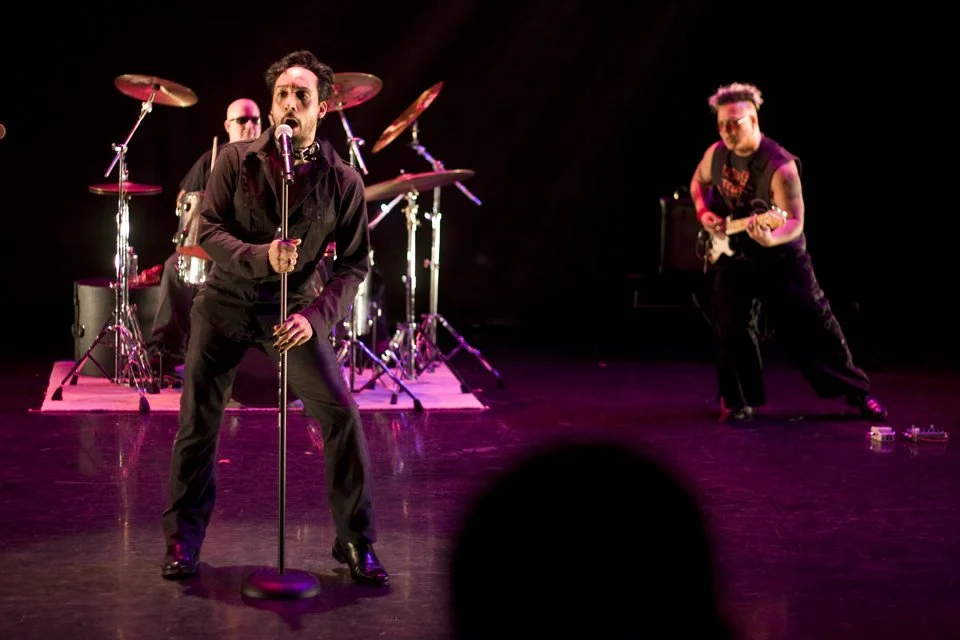
2011’s “Gentrified Minds” was a melodic holy rant against corporate suburbanization of NYC and conformity — transmitted through the mask of the Nomad Junkie and the fictitious band, The Children of Warhol.
2022 — Krapp’s Last Tape
After nearly a decade away from acting, Kangalee returned to the stage with Samuel Beckett’s KRAPP’S LAST TAPE, a work he had first encountered as a young actor and carried with him for nearly thirty years.
He was now a middle-aged man playing an old man: alone onstage, listening to recordings of his younger self. The collision between actor, character, memory and time gave the play an increasingly personal resonance. Where Gentrified Minds had returned Kangalee to performance through excess—music, poetry, persona and rage—Krapp demanded the opposite: stillness, breath, repetition, silence and the terrifying act of listening.
The production began as a private experiment during the pandemic and developed through an extended workshop before its first public performance in Brooklyn in 2022. Kangalee would continue performing Krapp through 2025, eventually bringing the work to California.
More than a return to acting, Krapp’s Last Tape renewed Kangalee’s fascination with the solitary performer: one actor, a voice, a body, a few objects and an audience. That discovery would lead directly toward SMILE: A Clown’s Ascension and, ultimately, his return to the MONO.
Studio 111 · Brooklyn · 2022
Carl Cherry Center for the Arts / Henry Miller Memorial Library · California · 2025
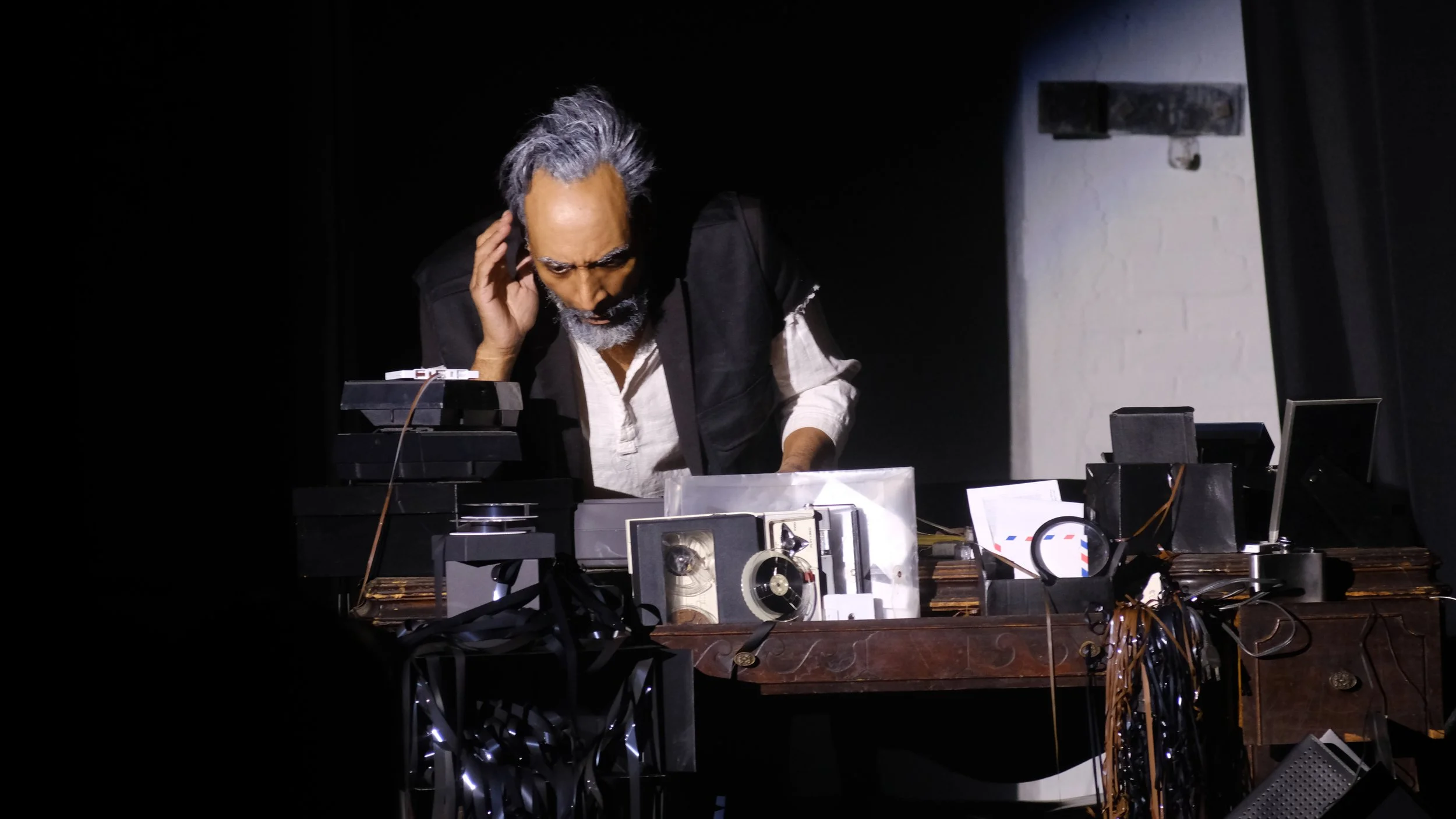
Emerging from the pandemic, 2022’s “Krapp’s Last Tape” saw Dennis Leroy Kangalee return to the stage in a whole new way and slaying a dragon he had wrestled with for over 25 years.
2024 — The Life & Death of Art
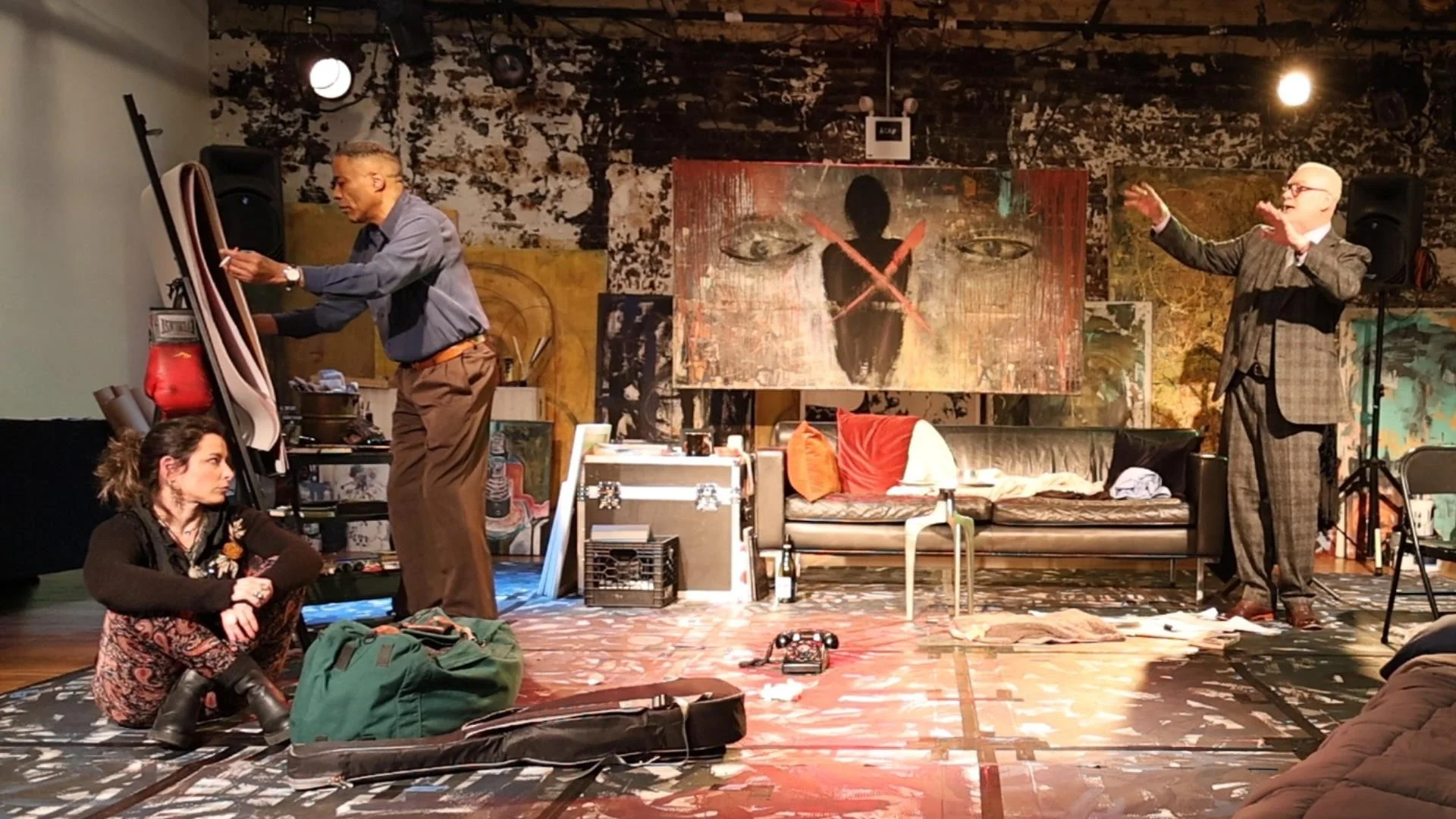
Elena (Justine Stock) Carver (Ward Nixon) and Solly (Ian Hersey) battling for Carver’s soul in “The Life & Death of Art.”
Directed by Dennis Leroy Kangalee, The Life & Death of Art was his first original play for the stage.
Written in little more than two weeks after the collapse of a planned production of Hamlet, the play centers on two radically opposed men: Carver Carmelo, a painter enjoying long-delayed commercial success who is willing to jeopardize that success through his commitment to and solidarity with Palestinians in Gaza; and Luca, a charming and ruthless confidence man who regards identity, art and even political conviction as currencies to be manipulated in the pursuit of status.
Set within a predatory world of artists, dealers, hustlers and cultural gatekeepers, THE LIFE & DEATH OF ART asks what remains of artistic conviction when art becomes inseparable from commerce, ambition and self-invention. Written during the opening months of the Gaza war, the play moves from intimate character drama toward political rupture—part Chekhovian chamber play, part Brechtian provocation, ending in what Kangalee conceived as an Artaudian wail.
JACK · Brooklyn · April 2024
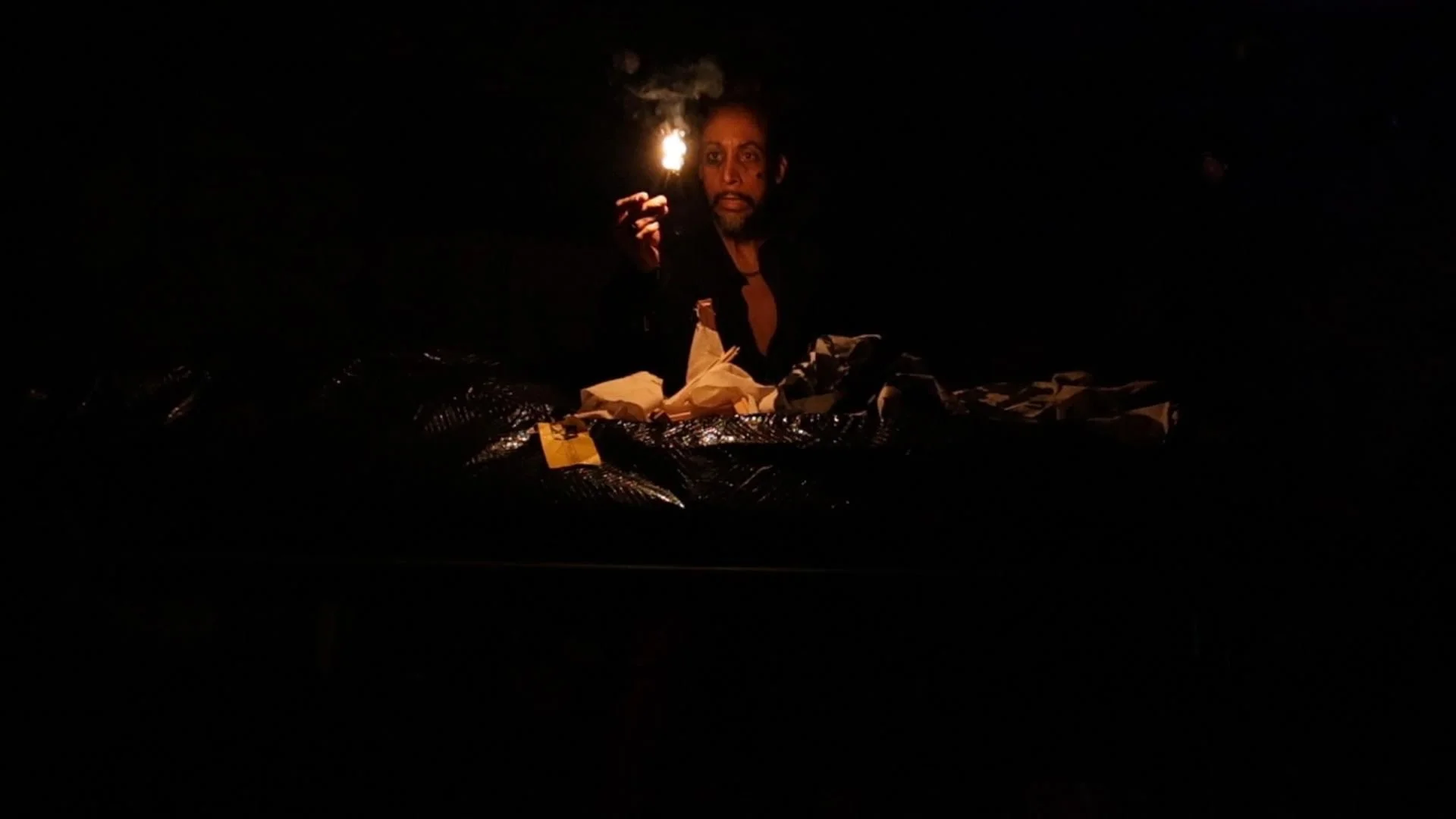
Dennis Leroy Kangalee as Luca, the “identity-politic terrorist,” & con man, in the closing scene of The Life & Death of Art.
2025 - Smile: A Clown’s Ascension
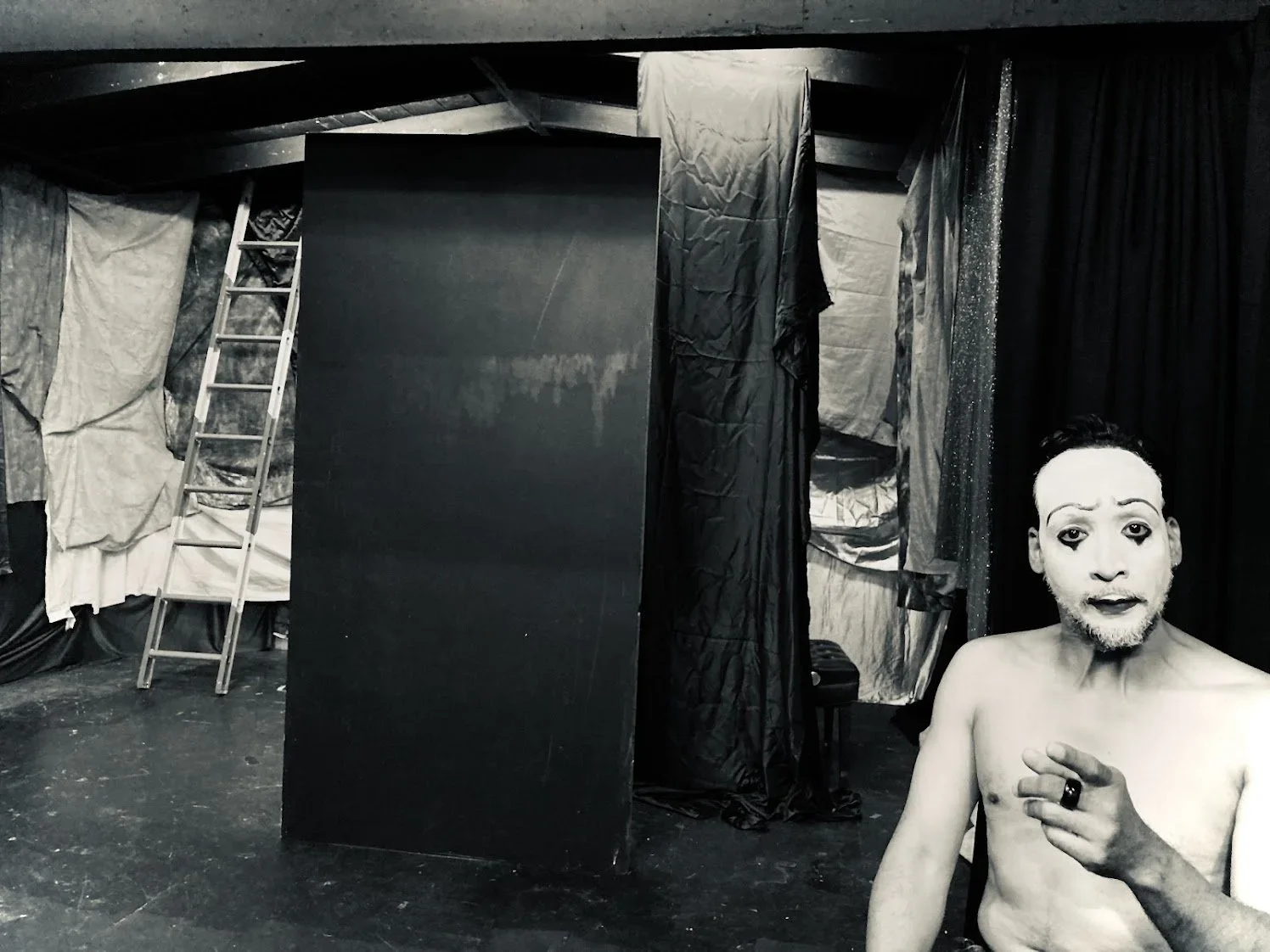
Adapted and performed by Dennis Leroy Kangalee, SMILE: A CLOWN’S ASCENSION is his solo adaptation of Henry Miller’s The Smile at the Foot of the Ladder.
Commissioned with the blessing of the Miller estate, SMILE follows Auguste, a clown who no longer wants merely to make people laugh. He wants to give his audience something permanent—something approaching transcendence. The perennial struggle of the artist, the work explores the angst and horror of being a sensitive being, an eternal outsider…and a threat to the state.
Co-written by poet Magus Magnus and combining Miller’s text with poetry, mime, music by Philip Glass, and direct address, the work marked a decisive movement in Kangalee’s practice toward the solitary performer and the possibilities of an increasingly stripped-down theatre.
Carl Cherry Center for the Arts / Henry Miller Memorial Library · California · October 2025
2026— My Dying City Vol. II (The Social Justice Suicide Hour)
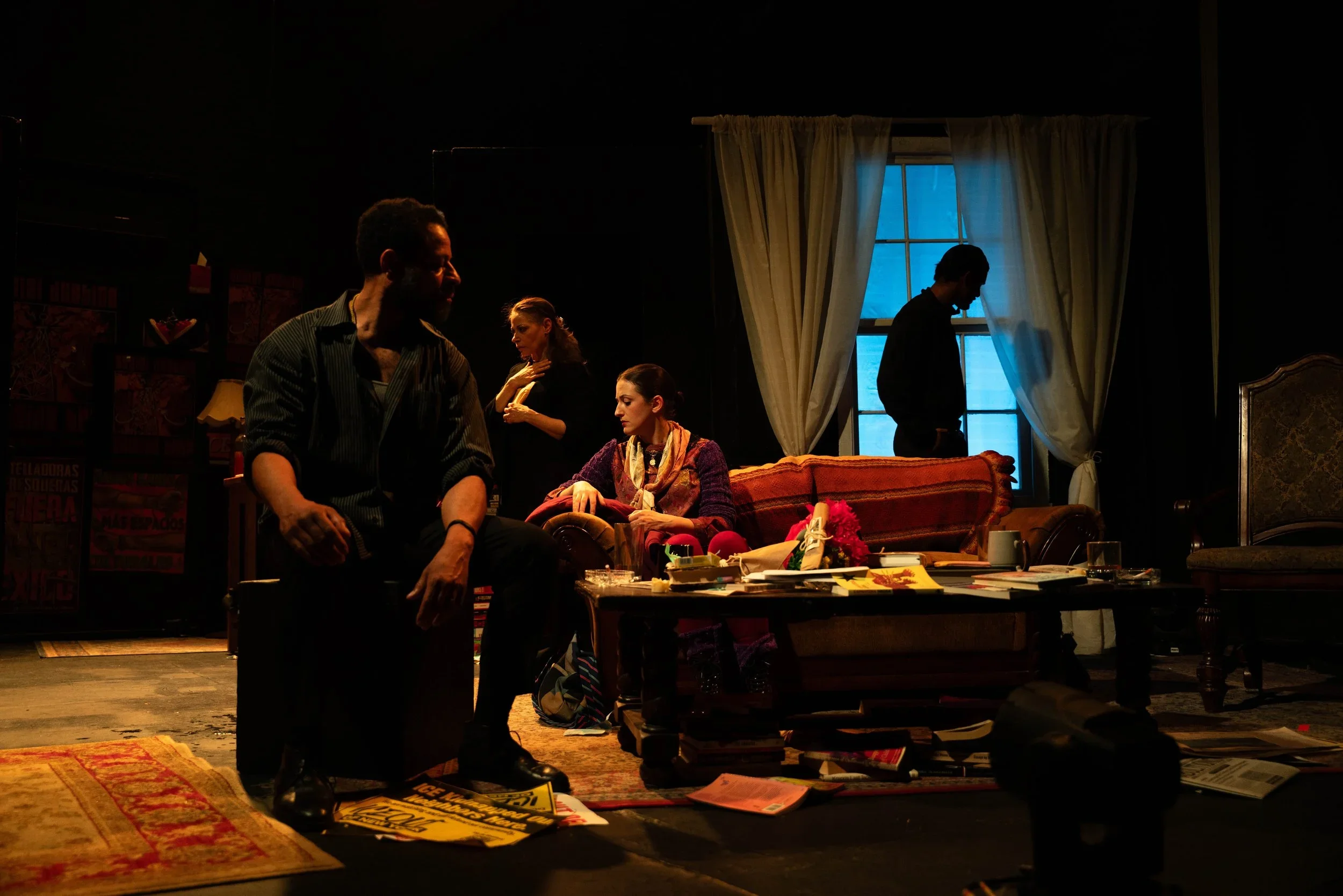
Written and directed by Dennis Leroy Kangalee, My Dying City Vol. II (The Social Justice Suicide Hour) is a five-character chamber tragedy about political disillusionment, private grief and the ruins left behind when a lifetime of revolutionary conviction can no longer protect a family from despair.
Former radical-radio hosts Paul and Nya gather with friends on the anniversary of their son Edmund’s suicide. As memory, ideology, love and recrimination collide inside their apartment, the distinction between a family’s mourning and the collapse of a political generation begins to disappear.
Kangalee’s most personal dramatic work, MY DYING CITY VOL.II brings together strains that had long existed separately in his work—political theatre, intimate realism, poetry, music, absurdism and the actor-driven chamber play—into a single dramatic form.
American Theatre of Actors · New York City · January 2026
2026— The Harm
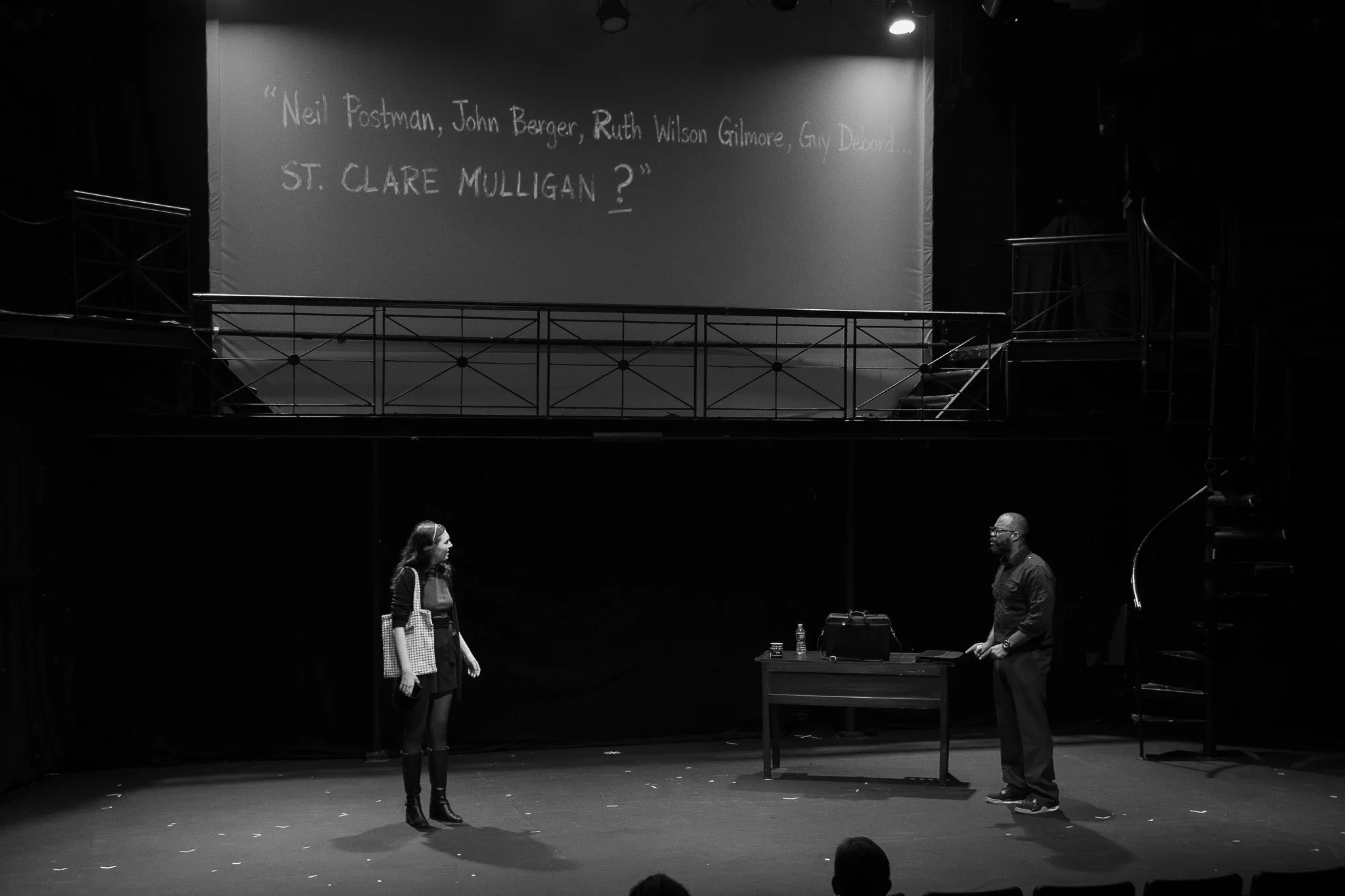
Written and directed by Dennis Leroy Kangalee, The Harm is a real-time academic drama about language, accusation and the increasingly unstable boundary between interpretation and intent.
A lecture on images, Hollywood and propaganda begins to unravel when a white student accuses her Black professor of antisemitism. From that encounter, the play accelerates into an investigation of race, media, institutional power, identity and the weaponization of language—asking what becomes of intellectual inquiry when words themselves are treated simultaneously as evidence, injury and crime.
Conceived partly as a kind of “answer” to David Mamet’s Oleanna, THE HARM is almost entirely dialogue-driven: fast, ferocious, darkly comic and increasingly claustrophobic. Beneath its arguments lies a simpler and more dangerous question: What is the truth—and who gets to name it?
19th Midtown International Theatre Festival · New York City · July 2026