
Performance as confrontation. Art as necessity.
Dennis Leroy Kangalee is a solo artist working across film, theatre, and live performance.
His work confronts the role of the artist in a world shaped by violence, memory, and survival—blending political urgency with intimate human experience.
xxXXXXXXX“I am not interested in performance as illusion. I am interested in performance as encounter.”
Dennis Leroy Kangalee is a 2025 recipient of the Action Lab’s Artist-in-Action fellowship & a Venturous Fund Arts Initiative Grant.
He is the first artist to ever induct a Black Theater History Seminar in Lincoln as a student at Juilliard. He is the only filmmaker who ever wrote a script with Ed Bullins. He is the first filmmaker to write actual scenes for the Last Poets in his movie, As an Act of Protest. He is the first artist ever to be commissioned to perform an adaptation of a Henry Miller story. He leads the only theater company in NYC that leans on radical politics and the liberation of the actor.
An outsider artist, Kangalee takes his cue from the outliers of jazz, the visionaries of poetry, and the mavericks of independent filmmaking…
Best known for his 2001 controversial movie on racism's psychological effects, As an Act of Protest, which the late Kam Williams, film critic, called "the best black movie nobody has the nerve to support,” ten years later his 2011 monologue Gentrified Minds against imperialist gentrification and further marginalized him within the establishment, but gained him respect and camaraderie amongst artists and those whose voices are under-represented.
His transgressive artistic output includes screenplays like Octavia: Elegy for a Vampire (which got him an honorarium from Princeton University) and his insistent workshopping of Samuel Beckett’s Krapp’s Last Tape. His plays, such as The Life & Death of Art, blends a poetic naturalism with passionate agitprop incurring demanding performance styles.
A triple-threat in acting, writing, and directing, Kangalee's work is a mix of passion, protest, and poetry, always challenging authority, institutions, hypocrisy and even his own life. He cherishes the sharing of his truths with audiences.
Inspired by songwriters, poets and storytellers (Gil Scott-Heron, Amiri Baraka, Spalding Gray), as much as he is influenced by the legacy of Bread and Puppet Theater, the cinema of John Cassavetes, the criticism of John Berger, and the decolonialist liberation politics of Frantz Fanon.
Like many radicals - and those who are suppressed, fired, marginalized, blacklisted, or “erased,” - Kangalee has become something of a curiosity in the history of American protest art and Black Theater dramaturgy (two fields of in which he is a leading outsider expert) due to his maverick status.
It was never his erudition that set him at odds with the theater establishment. It’s his temerity to express and say exactly how he feels - and mean every word of it. Particularly dangerous for a Black artist with radical politics.
“I can only perform or write what I feel. I can no longer pretend or have any interest in being what am I not. I don masks to find myself. When I accept this, I am healthy.Theater is in my blood or it’s just another drug perhaps. Either way I must deal with it.”
In June 2025, he received a commission from the Henry Miller Memorial Library to adapt and perform Miller’s haunting short story, “The Smile at the Foot of the Ladder.” He is the first American artist to tackle this. His performance, a monologue co-written by Magus Magnus, premiered at the Asilomar Chapel and closed in Big Sur in October 2025.
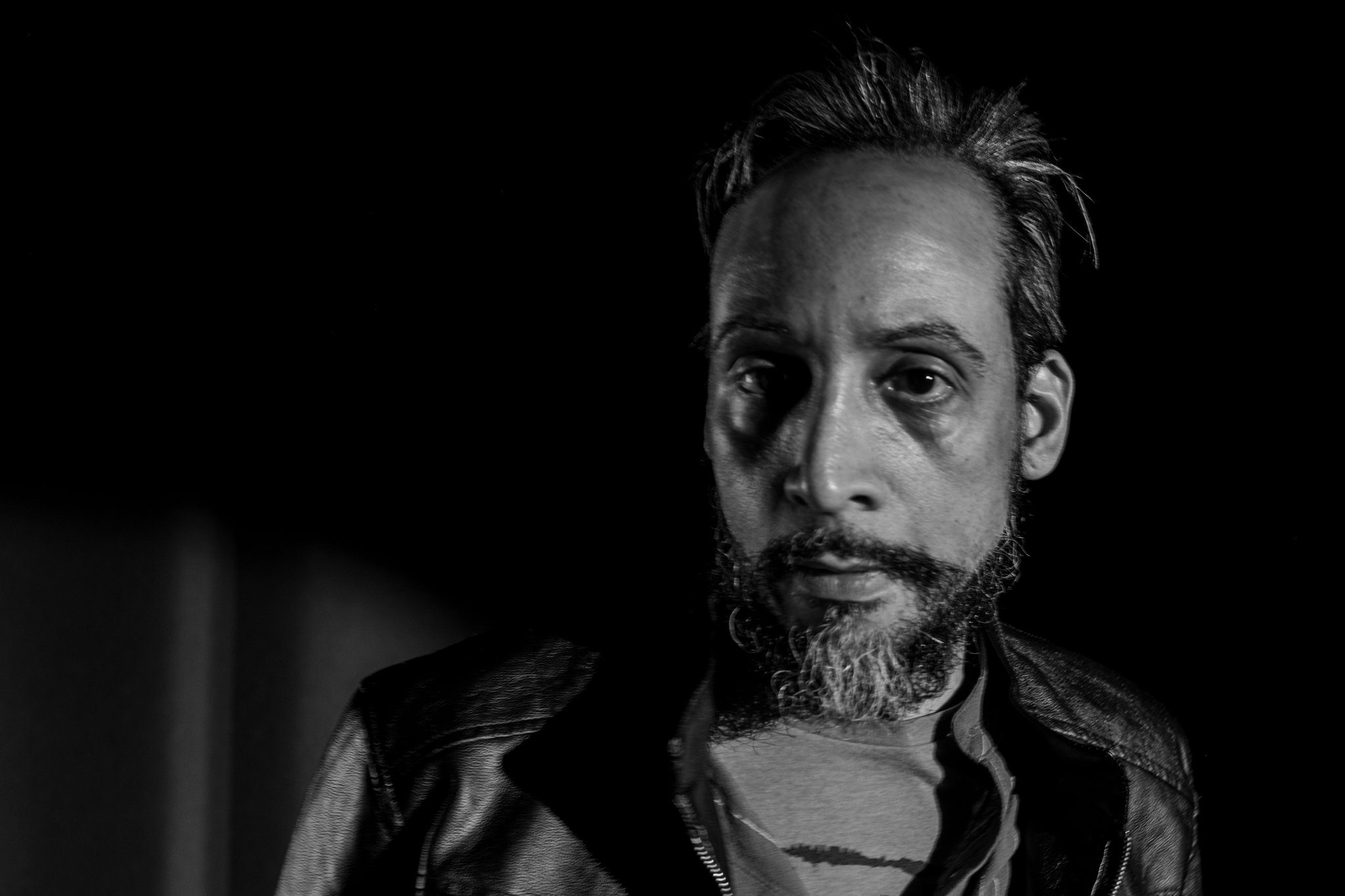
Dennis Leroy Kangalee, Studio 111 in November 2022. Photo: Kofi Yeboah.
“Somehow failure has never been an option, success never a goal, art never a thing to do, but an energy to be lived. To be an artist is to possess a special point-of-view, it is a way of seeing and living life. And if I am so concerned about fighting oppression and dismantling the tentacles of hatred - then I should start with myself, no? The artist is the most beautiful and practical avatar of social change because they rule the realm of the imagination. And the horror in life 'is not what is imagined, but in what is real.' Real life can often be brutal and terrifying. The artist illuminates all this and the actor, specifically, guides us towards liberation -- on screen, on stage...hoping to spill over into life."
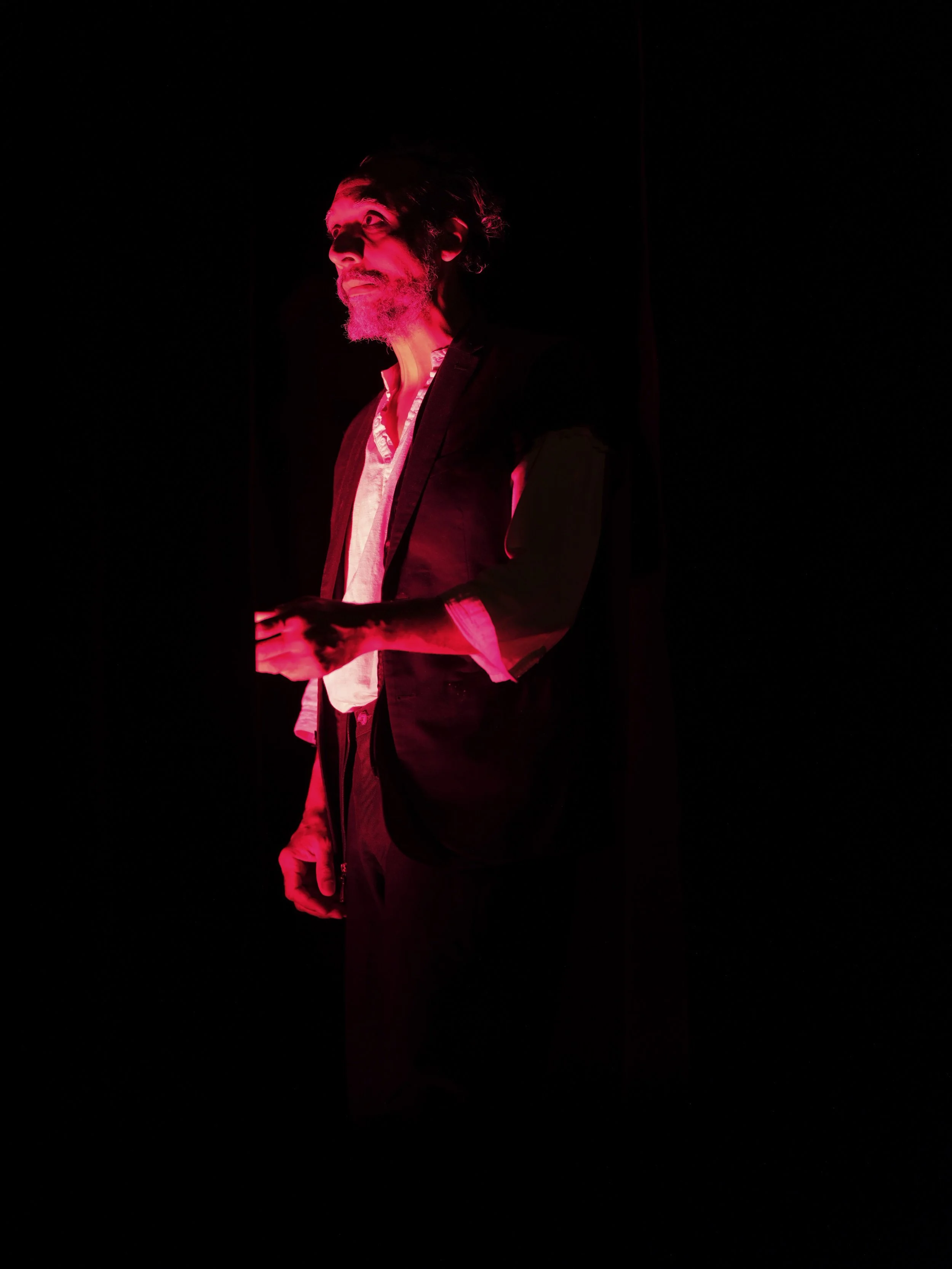
Performing Samuel Beckett’s “Krapp’s Last Tape” at the Carl Cherry Center, Monterey, CA. 2025 Photo by Manny Espinoza
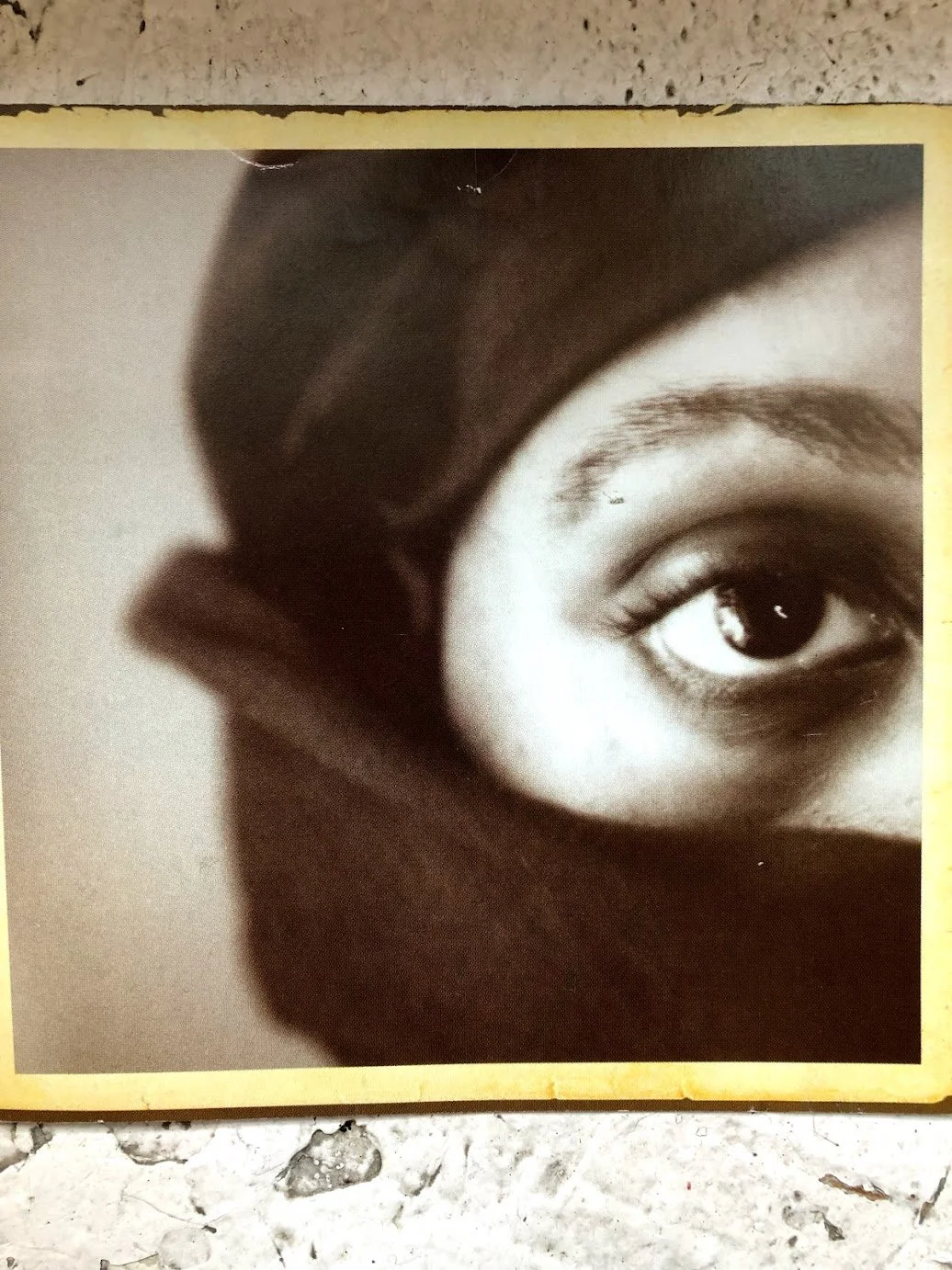
Dennis Leroy Kangalee on the cover of the underground hip hop album, Nat Turner Reloaded. (Photo: Nina Fleck, 2004)
Areas of Practice
DRAMA/playwriting
A complete list of plays and theater writings of Dennis Leroy Kangalee. Including access to his 2023 unpublished book of aphorisms, “Zedekoah.”
Decolonizing acting
Like colonized subjects, the actor suffers from a lack of confidence and understanding of who they are. While this obviously has overt racial implications (conservatories that don’t have adequate Black Theater aesthetic education, for example) — the colonized actor is simply an actor who thinks he needs all the talismans of the "industry” - a playwright, a director, a producer. When he can be all that himself. And as an artist who but the singular artist-actor can be responsible for the “songs that they sing”? Reflect and challenge the oppression of the times with roles that are passionate, provocative, and poetic. If the actor is liberated on stage, what might that mean for the man on the street?
FILM & THEATRE
Brief overview of the dramatic art of Dennis Leroy Kangalee as stage director, dramatist, and guerrilla filmmaker. From his years at the National Black Theater and Independent Art HERE to his commissioned performances based on Henry Miller’s work and his new wave approach to political theater in pieces such as “My Dying City Vol.II.”
visual liberation: a film pedagogy
The revolutionary gaze, decolonialist filmmaking, protest cinema…
solo performance
Dennis Leroy Kangalee, The Nomad Junkie: Poet and Performer. The monastic beauty of facing yourself and saying what must be said, expressing your truth. Whether a formal play or original monologue. Alone. Without a safety net. The actor as singer-songwriter. Con-fessional acting versus Pro-fessional acting.
cultural criticism & non fiction
Film criticism, jagged ideas, unfinished manifestoes.
“In the dark times / Will there also be singing? / Yes, there will also be singing. / About the dark times.”
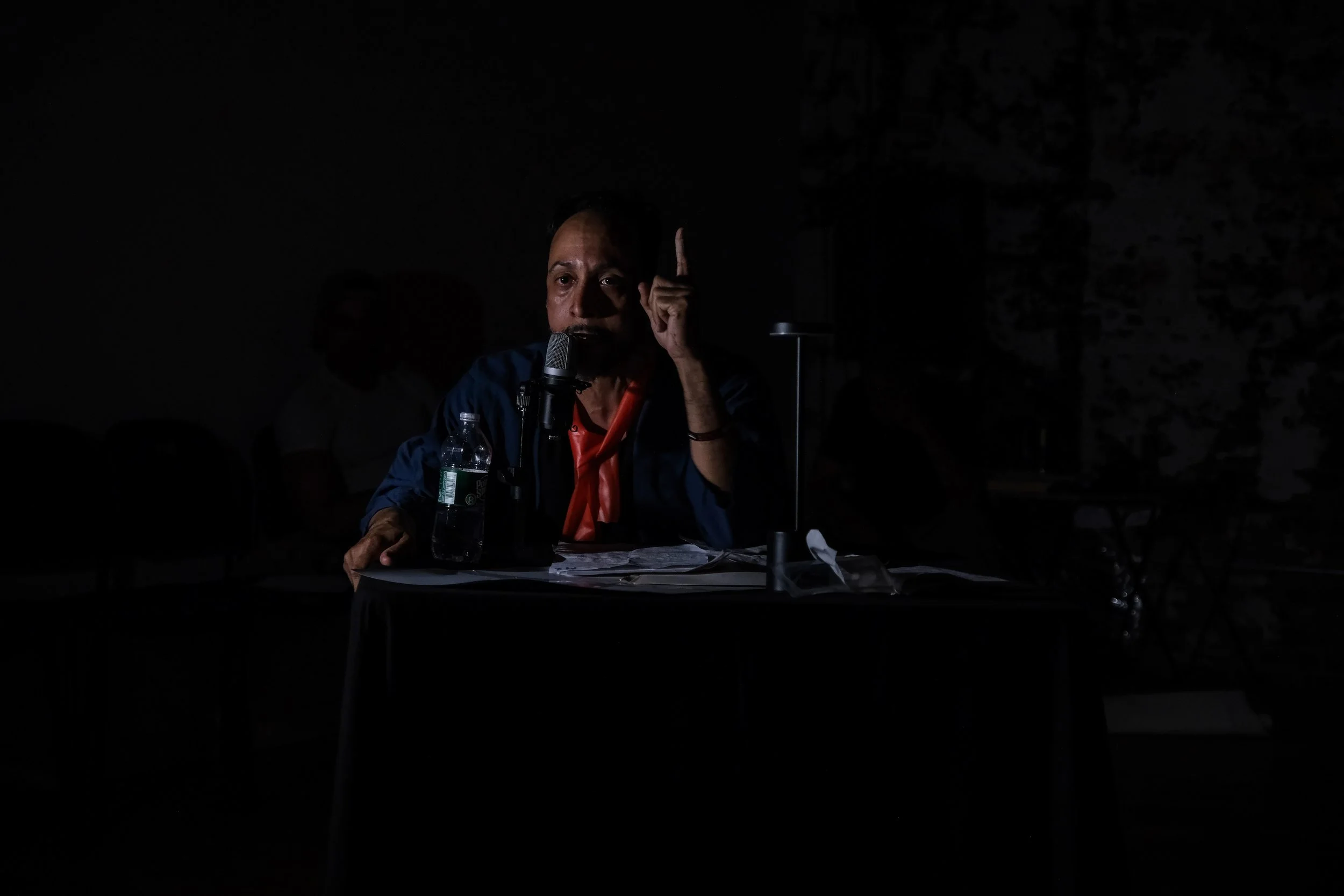
As Godfrey Kafka, the drug-addicted and embittered radical radio DJ in "My Dying City (or The Social Justice Suicide Hour)" - a messy, incomplete work-in-progress about the chaos and malaise of our times. (Courtesy of the Action Lab, 2025. Photo: Pamela Rozon)